
New vs Used Hockey Skates - Which Should You Actually Buy?
July 27, 2026
Skates are the one piece of gear I tell every beginner not to cheap out on — they're your connection to the ice, and bad skates make learning miserable. But "don't cheap out" isn't the same as "buy new." A good used pair can save you real money, and a bad used pair can ruin your feet and your first season. Here's how to tell the difference before you hand over any cash.
The Quick Answer
If you can swing it, buy new for skates — an entry-level pair ($150–250) that you can bake to your own foot is the safest path for a beginner. Skates are the gear where fit matters most, and new means the boot molds to you.
Used is a genuinely smart buy if the boot is still stiff, the fit is right, and you know what to inspect. A lightly used pair that retailed at $400 can go for $120. That's a real deal — as long as it isn't broken down or molded to someone else's foot.
The one thing I'd never do: buy soft, broken-down used skates just because they're cheap. Dead skates give you zero ankle support, and you'll spend the season flopping around blaming yourself instead of the boots.
The Case for New
New skates win on the thing that matters most to a beginner: fit and support.
- They mold to your foot. Almost every skate above the rock-bottom tier is heat-moldable ("bakeable"). Baked to your foot, a new boot eliminates pressure points and locks your heel in. That support is exactly what a new skater needs.
- Full stiffness. A boot's stiffness is what holds your ankle upright. New boots are at 100%. That support fades with use.
- No mystery history. You know it hasn't been baked three times, soaked, dried on a heater, or worn down by someone with a totally different foot.
- Warranty and returns. If something's wrong, you can take it back.
For a beginner spending in the $150–250 range, new is the low-risk choice. I break down specific models in Best Entry-Level Hockey Skates Under $250.
When Used Is a Smart Buy
Used isn't a trap — it's a great deal if the pair is right. It makes the most sense when:
- You want more boot for your budget. A used mid-tier or high-tier skate can cost less than a new entry skate while offering better support and materials — if it still has life left.
- The boot is still stiff. Squeeze the sides of the ankle. If it barely flexes, there's good support left.
- They were barely used. Kids and adults quit or outgrow skates constantly, leaving nearly-new boots on the resale market.
- You can try them on or return them. Fit is everything with skates.
Where to look, with buyer protections in mind: SidelineSwap, Play It Again Sports, and local Facebook groups. I cover the best sources in Best Places to Buy Used Hockey Equipment.
How to Inspect a Used Pair
This is the whole ballgame. Run through this checklist before buying any used skate:
| Check | What to look for | Red flag |
|---|---|---|
| Boot stiffness | Squeeze the ankle sides — should resist | Folds easily = broken down |
| Heel lock | Foot in, heel stays put | Heel lifts = poor support/fit |
| Rivets | Tight, no rust, none missing | Loose, rusted, or replaced rivets |
| Holder & runner | Blade holder firmly attached | Cracked holder, wobble |
| Steel | Enough blade height left to sharpen | Ground down, deep pitting, rust |
| Boot interior | Liner intact, padding present | Worn-through liner, matted padding |
| Smell & moisture | Dry, not sour | Rot smell = mildew inside the boot |
| Sole/outsole | Bonded to the boot | Separation between boot and holder |
Two that beginners miss most: blade height (each sharpening removes steel — a heavily-sharpened blade may have little life left, and new steel isn't free) and boot break-down (soft boots are the number-one reason cheap used skates disappoint).
The Heat-Molding Catch
Here's the nuance most guides skip. Heat-moldable boots are baked to conform to a foot. A used pair has already been molded to the previous owner's foot — different arch, different ankle, different pressure points.
The good news: many boots can be re-baked once or twice more at a shop, which resets a lot of that shaping to your foot. Before you buy used, it's worth knowing:
- Can this model be re-baked? Most mid-tier and up can; the cheapest boots often can't.
- How many times has it been baked already? Every bake slightly reduces how much life the materials have. One previous bake is fine; several is a warning sign.
If a used boot can't be re-baked and it's already shaped to someone else, it may never feel right on your foot. That's the difference between a deal and a regret.
The Real Cost Comparison
Don't just compare sticker prices — factor in what you'll spend to make used skates game-ready.
| New (entry) | Used (mid-tier) | |
|---|---|---|
| Purchase | $150–250 | $80–150 |
| Sharpening (initial) | Often included | ~$8–15 |
| Re-bake (if needed) | Included at purchase | ~$20–30 at a shop |
| New steel (if worn) | Not needed | $40–80 if required |
| Realistic total | $150–250 | $100–250 |
The takeaway: a good used pair genuinely undercuts new. But a used pair that needs steel and a re-bake can quietly climb to new-skate money — with more risk. Inspect first, then do the math.
Here's the number that decides it for most people. New entry skates start at about $150 — the True Catalyst 3X4 is $149.97 and the CCM Tacks Classic is $171.97, both bakeable, both brand new. So if a used pair is asking $120 and needs $30 of steel, you are paying new-skate money for someone else's foot shape. Used has to beat that number to be worth the risk — and plenty of used pairs do. Just make sure it's the math that convinces you, not the discount.
Common Mistakes
Buying used skates for the price alone. Cheap and broken-down is worse than a new entry skate. Support beats savings.
Skipping the fit check. Skate fit is snug — usually a half to full size down from your shoe size, with toes barely brushing the cap. Never buy blind if you can help it.
Ignoring the boot break-down. The single most important used-skate check. Soft boot, hard pass.
Forgetting the re-bake question. A boot molded to someone else's foot that can't be reset is a boot that may never fit you.
Overpaying for a name. A worn-out former-flagship skate isn't a bargain just because it cost $600 new. Judge the condition in front of you, not the original price tag.
Bottom Line
When in doubt, buy new — an entry-level, bakeable pair in the $150–250 range is the safest bet for a beginner, and fit is the whole point. See Best Entry-Level Hockey Skates Under $250 for models.
Go used when the pair passes the checklist — stiff boot, good heel lock, healthy steel, and either barely-baked or re-bakeable. Done right, used skates are one of the best values in hockey. Done carelessly, they're the fastest way to hate learning to skate.
Whatever you buy, get them sharpened and fitted properly before your first skate. Your ankles will tell you if you got it right.
See you on the ice.
| Photo | Product | Price | Buy |
|---|---|---|---|
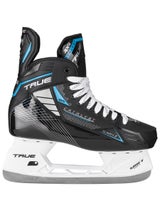 |
True Catalyst 3X4 True · Skates |
$149.97 | Check Price → |
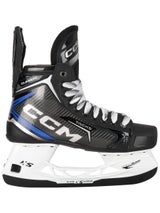 |
CCM Tacks Classic CCM · Skates |
$171.97 | Check Price → |