
Hockey Helmet Safety - When to Replace and What Certifications Matter
February 17, 2026
Your helmet is the single most important piece of equipment you own. Full stop. This guide covers safety certifications, replacement schedules, and proper fit — because protecting your brain isn't something you wing.
Why Helmet Safety Matters
The Stakes Are Real
I'm not going to sugarcoat this. Head injuries are serious — concussions can have long-term effects, skull fractures are life-threatening, and brain injuries can be permanent. Protection here is non-negotiable.
And before you say "but I'm in a non-contact league" — falls happen constantly. You'll collide with boards. Errant pucks and sticks find heads. Other players run into you accidentally. It doesn't take a body check to get hurt.
Your helmet is the one piece of gear you should never compromise on. It's worth investing in properly, and it's something you'll need to replace periodically.
Common Misconceptions
"My helmet looks fine, so it's fine." Nope. Internal damage isn't visible. Foam compresses over time, impact protection degrades, and materials break down — all without showing a scratch on the outside.
"I only need to replace after a big hit." Also wrong. Small impacts accumulate. Helmet materials age and degrade on their own. Those expiration dates exist for a reason. Time alone reduces your protection.
"Expensive means safer." This one surprises people. Certification matters more than price. A $60 certified helmet beats a $200 uncertified one every time. All certified helmets meet the same minimum standards — expensive models add comfort features, not necessarily better safety.
Understanding Safety Certifications
Required Certifications
For hockey in North America, here's what you're looking for.
CSA (Canadian Standards Association) is required in Canada. It's the gold standard for hockey helmets with rigorous testing. Look for the CSA sticker inside your helmet.
HECC (Hockey Equipment Certification Council) is required in the USA. It tests impact protection and certifies both helmets and cages. Again, look for the HECC sticker inside.
CE (European Conformity) is used in Europe. It's similar to CSA/HECC and accepted in many international leagues. Look for the CE marking.
What These Certifications Actually Test
The testing is pretty thorough. They're checking impact resistance through drop tests from various heights, at multiple impact points, across different temperatures, plus aging tests. They test penetration resistance — puck impacts, stick blade strikes, sharp object tests.
They also evaluate the retention system — chin strap strength, buckle durability, strap adjustment range. And they verify coverage area — minimum coverage requirements for your ears, temples, and back of head.
How to Verify Certification
Check inside your helmet. Look for certification stickers — you should see CSA, HECC, or CE. Check the expiration date and verify the model number.
Here are some red flags: no certification stickers at all, stickers peeling off or missing, foreign text only (unless CE certified), labels that say "for recreational use only," or no expiration date listed. If you see any of these, don't use that helmet.
Never buy uncertified helmets, helmets without stickers, expired helmets, or damaged helmets — even if they're still certified.
When to Replace Your Helmet
After Any Significant Impact
Replace immediately if your head hit the ice hard in a fall, you went into the boards head-first, you took a stick or puck to the helmet at speed, or any impact that dazed you.
How do you know if an impact was significant? If you felt the hit strongly, if the helmet shows visible damage, if you saw stars or felt dazed, if other players noticed, or if you have any concussion symptoms — it's time for a new one.
Here's why: foam compresses and doesn't fully recover. Micro-cracks form in the shell. The internal structure gets compromised, protection drops significantly, and the next impact becomes more dangerous.
Visible Damage
Replace your helmet if you see any cracks in the shell — any size. Deep scratches, deformation, dents, or separated layers all mean it's done. Same goes for foam damage — compressed areas that don't bounce back, missing chunks, crumbling foam, or gaps between foam and shell.
If your retention system has issues — broken chin strap, non-functioning buckles, torn padding, broken adjustment mechanisms — that's a replacement. And if the cage or visor mounting is compromised — broken clips, stripped screws, cracked mounting points — don't try to rig it. Get a new helmet.
Age-Related Replacement
Even without a single impact, helmets need replacing based on age.
| Usage | Replace after | Why |
|---|---|---|
| Recreational use (1–2x per week) | 5–7 years from the manufacture date | Sooner if it's showing wear or was stored improperly |
| Frequent use (3+ times per week) | 3–5 years | Materials break down faster with more sweat exposure and higher impact accumulation |
| Stored/unused helmets | 5–7 years from manufacture (follow the manufacturer's expiration date) | They still age sitting on a shelf. The materials degrade regardless |
Helmet Expiration Dates
Finding the Expiration Date
Check inside the helmet on the certification sticker. Sometimes it's printed directly on the foam, or it might be listed as a manufacture date plus X years. Your manual will have it too — if you still have it.
Common formats include "EXP: MM/YY," "Manufactured: MM/YY - Replace by: MM/YY," "Do not use after: YYYY," or a date code you'll need to look up.
If no date is visible, assume it's expired. You can contact the manufacturer with the model and serial number, but when in doubt, replace it.
Why Helmets Expire
Materials degrade over time — it's just chemistry.
Foam liners: Polyurethane breaks down. It loses the ability to absorb impact, becomes brittle, and develops compression set — meaning it doesn't bounce back anymore.
Shell materials: ABS plastic becomes brittle and loses impact resistance. UV exposure weakens the structure, and temperature cycling degrades the material further.
Adhesives weaken too. The glues holding layers together lose their grip, foam separates from the shell, and the whole system becomes less effective.
Straps and padding deteriorate as fabric breaks down, elastic loses stretch, and foam padding compresses permanently.
Typical Lifespan
Here's what the major manufacturers specify:
| Brand | Lifespan from manufacture |
|---|---|
| Bauer | 6.5 years |
| CCM | 6.5 years |
| Warrior | 5 years |
| TRUE | 6 years |
The general rule is 5-7 years maximum regardless of use. Sooner if you play frequently, sooner if you've taken significant impacts, and sooner if you see visible wear.
Used Helmets
I'll be direct — buying used helmets is risky. You don't know the impact history, it could be expired, there might be hidden damage, and it might not fit you properly.
If you absolutely must buy used, verify the certification, check the expiration date, inspect for all damage, know the previous owner, and consider that it's already used up some of its lifespan.
My recommendation? Always buy helmets new. The savings on a used helmet aren't worth the risk. Your brain is priceless. New helmets start at $60-80 — that's a small price for head protection.
Proper Fit and Testing
How a Helmet Should Fit
The fit should be snug without being painful. It shouldn't move when you shake your head, it should sit level (not tilted), cover your temples and back of head, and rest about one finger width above your eyebrows.
Front: One finger width above eyebrows, doesn't obstruct vision, temples covered, no pressure points on your forehead.
Sides: Ears fully covered (unless there's a specific cutout), temples protected, adjustment pads touching your head, no gaps.
Back: Covers the base of your skull, protection extends below the occipital bone, doesn't ride up when you look down, stays secure without sliding.
Top: The shell should rest on your head — not floating above it. Full contact with padding, no rocking motion.
The Shake Test
Here's how to check your fit:
- Put the helmet on properly
- Fasten the chin strap snugly
- Shake your head side to side vigorously
- Shake front to back
- Try to twist the helmet with your hands
Good fit: The helmet stays in place and your skin moves with it. Too loose: The helmet shifts or rotates. Too tight: You feel painful pressure points or get a headache.
Chin Strap Adjustment
Your chin strap should be snug under your chin with about two-finger clearance when your mouth is closed. It needs to be tight enough that the helmet doesn't slide, but not so tight you can't open your mouth. Both sides should have even tension.
The most common mistake I see? Chin strap too loose. If the helmet slides on impact, it defeats the entire purpose. Adjust it properly every single time you put it on.
Adjustment Systems
Modern helmets come with tool-less adjustment — dial systems, lever adjustments, quick-release padding. They also offer different pad thickness options so you can swap pads for a better fit in different areas and eliminate pressure points.
Here's how to dial it in:
- Start with medium pads everywhere
- Identify pressure points
- Try thinner pads in pressure areas
- Try thicker pads where gaps exist
- Run the shake test after each change
Buying a Safe Helmet
Minimum Requirements
These are non-negotiable: CSA or HECC certification (or CE in Europe), current (not expired), new (not used), proper fit (try it on), and complete with all pads and straps intact.
Budget breakdown:
| Tier | Price | What you get |
|---|---|---|
| Minimum | $60–80 | Entry-level certified |
| Recommended | $80–150 | Better comfort, same safety |
| Premium | $150–300+ | Comfort features, lighter weight |
Here's the thing — safety doesn't require premium prices. A $70 CCM certified helmet protects as well as a $250 model. Both pass the same certification tests. The expensive models add comfort, weight savings, and aesthetics, but the base protection is equivalent.
Features to Consider
Beyond basic safety, here's what you're paying extra for.
Comfort: Better padding materials, more adjustment options, improved ventilation, lighter weight that reduces neck strain.
Convenience: Tool-less adjustment, easy pad removal for washing, better retention systems, integrated cage/visor mounts.
Ventilation: More vents mean better airflow, less fogging with a cage, and a cooler head during play.
Weight: Lighter means less neck fatigue. High-end models can be 50-100g lighter — noticeable over long sessions and worth it if you play frequently.
Recommended Models
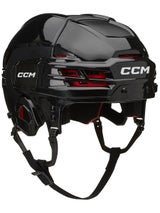
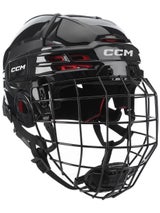
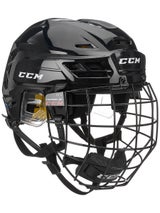
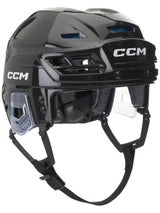
Buy the helmet with the cage already on it. Your league is going to make you wear one, and the combo costs about $10–$20 less than buying the two separately. Skip straight to the CCM Tacks 70 with cage at $74.99 if you just need to be legal and safe — it carries the same certification as the $240 one.
One honest note before the table: the retailer I link stocks CCM's Tacks line and almost nothing else in adult helmets — no Bauer at all. That's not me saying Bauer helmets are bad; they're fine, and if your local shop has one that fits your head better, buy it. I'd just rather show you what I can actually stand behind than pad the table with links I don't have.
| Tier | Helmet + Cage | Price | Why | Buy |
|---|---|---|---|---|
| Budget | CCM Tacks 70 Helmet w/Cage | $74.99 | Certified, protective, and the honest floor. Start here | Check Price → |
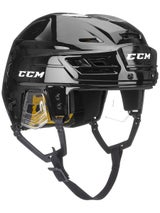
| Mid-range | CCM Tacks 210 Helmet w/Cage | $159.99 | Better padding and venting. Worth it if you play weekly | Check Price → |
| Premium | CCM Tacks 310 Helmet w/Cage | $239.99 | Lighter, tool-less fit. Comfort, not extra safety | Check Price → |
Already own a cage you like? The bare helmets run cheaper — the CCM Tacks 70 is $64.99 and the CCM Tacks 210 is $129.99.
If I had to pick one: the Tacks 70 with the cage. I know that reads like a cop-out because it's the cheapest thing on the list, but it's genuinely the right answer. Every helmet above passes the identical certification test — you are paying for comfort, not for safety. Put the $85 you saved toward ice time.
Cage vs Visor vs Hybrid
Full cage gives you maximum face protection. It's required in most adult leagues, can fog up, and is the best choice for beginners.
Visor only offers better vision and less fog, is allowed in some leagues, but provides no jaw or tooth protection. It's riskier.
Hybrid (half shield) gives you an upper visor with a lower cage — a balance of visibility and protection. It's popular at higher levels but more expensive.
For beginners, start with a full cage. Safety over style. You can always upgrade to a visor later if your league allows it.
Maintenance and Care
Cleaning Your Helmet
Regular cleaning means removing the pads monthly, hand washing them with mild soap, air drying completely, and wiping the shell with a damp cloth.
Deep cleaning should happen quarterly or as needed. Disassemble completely, wash all fabric components, disinfect with antibacterial spray, and check for damage while everything's apart.
Never put your helmet in the washing machine, use harsh chemicals, submerge electronics (some helmets have sensors), or dry with heat — that damages the foam.
Storage
Proper storage extends your helmet's life. Keep it in a cool, dry place, out of direct sunlight, not in a hot car trunk. It should be in a well-ventilated area, stored upright or hanging — never compressed.
Bad storage means a hot garage, direct sun exposure, extreme cold, being compressed under other gear, or a humid basement. All of these accelerate degradation.
Regular Inspections
Monthly: Check the shell for cracks, foam for compression, straps for wear, buckles for function, cage/visor mounting, and the certification sticker.
Before every game: Do a quick visual check. Make sure all parts are present, test the chin strap, and verify your adjustments.
| Photo | Product | Price | Buy |
|---|---|---|---|
 |
CCM Tacks 70 Helmet CCM · Helmets |
$64.99 | Check Price → |
 |
CCM Tacks 70 Helmet w/Cage CCM · Helmets |
$74.99 | Check Price → |
 |
CCM Tacks 210 Helmet CCM · Helmets |
$129.99 | Check Price → |
 |
CCM Tacks 210 Helmet w/Cage CCM · Helmets |
$159.99 | Check Price → |
 |
CCM Tacks 310 Helmet CCM · Helmets |
$189.99 | Check Price → |
Final Thoughts
Your helmet protects your brain. Don't compromise on this.
Here's what matters: only buy certified helmets (CSA, HECC, or CE), replace after any significant impact, replace after 5-7 years regardless, always buy new, get the fit right, and remember — a cheap certified helmet beats an expensive uncertified one every time.
A $70 certified helmet properly fitted protects you just as well as a $300 one. The expensive features are about comfort, not safety.
But don't skip buying a helmet or use an expired one to save money. Your brain is worth the $70 investment.
Stay safe out there.